
These writings are designed for preaching on the Sundays that correlate to the scripture listed in the Lectionary of the 1979 Book of Common Prayer. As of Advent 2010, these are no longer the texts selected for use in most Episcopal Churches. But mine does.
Each sermon links to the scripture that influence it.
-
Blind Eye
A sermon for John 9:1-38 Presented at Christ Church, Bordentown NJ, March 18 & 19, 2023.
I was at the Pittsburgh Airport many years ago, waiting at a gate for my plane when I noticed Ray Charles (the renowned singer who lost his eyesight at the age of 7) at the adjoining gate. Even though he had an entourage of folks surrounding him, I was staring at him amazed at how well he walked around with minimal help. As I continued to stare, I was not looking as I went to sit down. And instead of landing on a cushy seat, I landed my tailbone on the hard metal armrest of the airport bench _ and it hurt. A lot.
Clearly, my guardian angel was going to let this opportunity pass, and not nudge me into the right spot this time.
And I learned two lessons that day. One, my mother was right _ do not stare at people. And two, just because the person that you’re staring at- can’t see you staring back at them, does not negate rule number one.
When I think about today’s Gospel, I’m reminded of that day in the airport and I wonder, who’s really the blind person in my story?
Gospel reading and sermon begins at 18:33
Which is why I think I have a fondness for today’s Gospel. I like these stories in the Bible about Jesus healing the blind and those with afflictions or handicaps. They are stories of goodness and kindness, and they illustrate a moral attitude that we should follow.
And even though we don’t know the blind man’s name_ or much about the man in today’s Gospel_ there’s more personal detail in this story of this man’s curing than most stories in the Gospels and this gives us a chance to understand how this man might feel. To see what I mean, think about how this story sounds when told in the first person, it might sound a little like this…
“I’m a man who was blind at birth and I was begging in the street one day.
Strangers passing by were talking about me openly and questioning amongst themselves whether my blindness made me a sinner or not.
Then I heard someone spit and someone rubbed mud on my eyes and told me to wash in the pool of Siloam.
Which I did and my sight was restored.
So, I started telling others that I was the blind beggar that they knew from the street, and they didn’t believe me.
They brought me to the temple to recount my story and they didn’t believe me.
The leaders then went to my mother, and she refused to answer their question about whether or not I was blind before, because she was afraid that they would throw her out of the church.
Then the leaders questioned me again. When they didn’t like the answer I gave them about Jesus they were nasty and dismissive, saying you can’t teach us anything because you were born in sin and then they kicked me out.
And then I ran into Jesus again, and I felt so relieved.”
So, as you might imagine, and heard, there are a lot of layers to this story. But for the sake of time, let’s back up to the part where he said strangers were openly talking about him. This of course was Jesus’ disciples asking Jesus, “Rabbi, who sinned, this man or his parents, that he was born blind?” Let’s focus on THAT question AND Jesus’ answer of “Neither”. Because there is a notion at this time that those who are handicapped or afflicted were considered sinners.
It’s not a surprise that people thought that way. In the Old Testament, there are many teachings that folks heard that establish that sin will be punished by blindness. Also during the time of this story, diseases of the eyes had been acknowledged for a long time, but we were still a long way from modern medicine’s understanding of blindness.
It was also easy to look down on this blind man. His lack of sight most likely was the reason he had to beg in the streets. He was most likely not able to sustain a standard of living that others could. He was also probably avoided…folks probably didn’t make eye contact, which is probably why he wasn’t even recognized when he stopped begging. And they probably feared him. This blind man was considered a sinner _ and who knows what would’ve happened if you associated with him.
But Jesus was clear in his answer to his disciples that this blind man was “born blind so that God’s works might be revealed in him”. His blindness had nothing to do with his lack of faith in God. It had nothing to do with his trespasses or transgressions. This man’s story of blindness was a lesson for all of us that even those born in darkness have the ability to live in the light. And when linked with the other stories of Jesus’ healings, it tells us that no matter what our affliction is, we are not different from each other. We are all God’s children, and we can all see the light.
So, as we consider this fourth Sunday in the season of Lent, we think about what God wants us to learn about yourselves. Think about it as a light He’s shining on us. In turn, it’s a light we can then shine onto to others to help them see. And that light is grace. And when we share grace, and treat each other with grace, we see and hear each other more clearly _ and understand each other better. Through God’s light, this is how we can truly accomplish the act of treating everyone without disparity and prejudice, and instead as fellow human beings. And that does not require eyesight to do.
But as a society we’re still dodging the afflicted and handicapped. We bar them from jobs and participating in activities. We avoid eye contact and don’t always take more time to listen. Some of that is fear because deep down we know that out of all the minorities in this world, being handicapped is the only one that we could all possibly become. And that’s a scary thought being seen as less-than.
But being handicapped as God has shown us does not mean that the handicapped are less-than in any way. If anything, our handicaps are the things that reveal God’s good works. It shows us a way toward humility. It shows us that we can be brave in the face of adversity. It’s also an opportunity to show that we care about our fellow human beings on this earth. And _ if you happen to be disrespectful, for example stare a little too long, your guardian angel just might look the other way on occasion.
Not that guardian angels are cruel. But sometimes not nudging us into the comfortable seat is a little reminder of how it feels bad to be treated less-than. And a chance reminder that we can be better, to walk the way Jesus wants us to walk (good, right and true, as Saint Paul said), and to continue to walk in God’s light.
-
Forget Balance and Embrace Grace*
The events from the past two months have been remarkably out of the ordinary. Before Thanksgiving, I got COVID (after dodging any cold or flu for 2 and a half years). After Thanksgiving, my spouse got COVID. A week later, he gets another respiratory virus. Our Christmas schedule was overly busy. Right before the New Year, my mother-in-law passes away and we have to quickly make arrangements for travel and cat sitting. Then my family has an unexpected quick and weird reunion of sorts after many years of estrangement.
Frankly, I need respite. And this weekend, we’re finally back to our regularly scheduled program, which includes writing all this down.
The other thing worth mentioning is that throughout this time, I experienced and noticed a lot of genuine kindness from neighbors, relatives, colleagues, health workers, hotel workers, and random strangers along the way.
I say notice because (and don’t cry for me Argentina) I don’t pick up on easily when kindness comes my way. I pray and spend most of my day, believing that there are very few truly bad people in the world, just bad actions. But at some point in time in life, it was baked into me a sense that there’s a line around the block of folks just waiting to commit an act of unkindness toward me. People have certainly done their share. And let’s face it, in the great history book of my life, I have too.
A relative used to say to me all the time, “I forgive. But I never forget.” One, when I still talk to them these days, I don’t get the sense that they forgive anyone. Two, I wonder can you really forgive but not forget?
I forgot a lot of things. But when I recount the stories that I remember of bad things done and said to me, it doesn’t feel like I’m forgiving. It’s not a sense of revenge, or wanting retribution, or that I want to inflict the same pain back. Sometimes, it would be nice to have had an acknowledgement, some empathy or an apology.
But mostly I feel a need to have justice. But I don’t know what having that sense means. So I looked up the etymology of the word justice and found that it comes from the Latin, iustitia which means “righteousness or equity”.
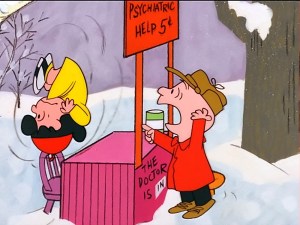
“That’s IT!” That makes perfect sense. When I remember bad stuff, in my mind I go back in time, and think about how to balance it out _ between today and yesterday, between right and wrong, and I think, how much more time do I want to spend on these memories? And am I really restoring any balance in my life? Or am I perpetuating a continued lack of balance?

Many moons ago, I learned several exercises from a trainer using an upside down bosu ball including while standing on it. Essentially it’s like standing on a flat surface that has a balloon attached to the bottom of it. It is not stable nor sustainable in that you cannot live all day on it.
While standing on it, you have to work very hard to stay balanced. You’re fighting against nature _ gravity, fluctuations in the air around you, the amount of oxygen and blood flowing to your muscles, and staying mentally focused. Eventually you will tip and one side will take over and throw you off balance.
And that is what life is like. No matter how strong, mentally attuned, physically coordinated, planned out you are, eventually there will be disruption to the balance that you strive so hard to maintain.
This then begs the question, is balance perhaps a great big lie. Biblically, it may be a trick by Satan and his cohorts to make us think we can control everything, and when we can’t it’s someone’s else’s fault. It’s the fault of our parents, it’s our neighbors, it’s our work colleagues, it’s our politicians, it’s maybe even ourselves. Or worse, it’s God’s fault and we think that God wants us to have miserable lives. I don’t go that far. But some folks do blame God and that’s a shame.
I could dive into that notion farther. But I think that Nadia Bolz-Weber, a pastor whose writings and sermons I admire, said it well in her Jan 6, 2023 sermon and post, “Enjoy Your Forgiveness”
“It is not God, but the devil who rummages through our garbage looking for already forgiven sins to rub our noses in to say “this is who you really are”.
But in Christ, who they [everyone you know] really are, is forgiven and who you really are is forgiven. And I’m so sorry to be the one to say it, but so is everyone you resent. Which at first sounds awful. But to know that in the kingdom of God there is pardon for you and for me and for everyone who has ever hurt us is true freedom…because we can just stop thinking an eye for an eye is going to help us, we are free to stop re-litigating decades old crimes of our siblings and our parents, we are free to stop beating ourselves and everyone else up for stuff in the past.”
Exactly.
God doesn’t want us to have miserable lives. He wants us to be free to choose. He wants us to recognize that life is complicated and always will be. And that it is complicated not just for you, but for EVERYONE. And you cannot control everything. And neither can everyone else. And your best choice is grace. Grace for yourself, and everyone.
Paul in his letter to the Ephesians spoke of grace that God has for us even in the face of our own transgressions. “But because of his great love for us, God, who is rich in mercy, made us alive with Christ even when we were dead in transgressions—it is by grace you have been saved.” (2:4-5)
And that’s how it feels after a couple of months of hardship. That God and a lot of people gave me their grace. And it took this concentrated amount of time to see there is not a line around the block of folks just waiting to commit an act of unkindness toward me. (Well, maybe a few.)
But still, it’s not my job to be their judge and jury. Conversely, it’s not my job to just give up and let people treat me poorly because they want to.
I can choose to give it the time and space in my life that it deserves, and truly forgive and forget. I can forget about achieving balance on the great upside down bosu ball of life and instead give grace.
I want to be granted grace. I want what grace offers _ space to be me, to be heard, to be understood. Grace is not a get-out-of-jail free card. Wrongful acts are wrong and they are going to happen, and we can deal with them with grace. Not resentment, not bitterness, not revenge, not an eye-for-eye.
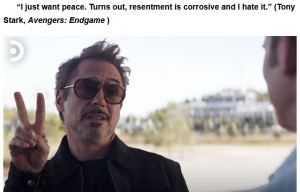
So I want to give grace. Because when you give grace, in the same way that others and God have given you grace, the scales of justice are truly aligned. So forget balance and embrace grace.
*Inspired by Tish Harrison Warren’s NY Times article, January 1, 2023, “New Year’s habits that are good for the soul”. “Last year I asked writers, scholars and spiritual leaders to suggest resolutions that weren’t focused on sculpting a beach body or maximizing one’s earning capacity but were instead practical ways to nourish one’s soul or the “soul” of our society.” and she received this quote from Nii Addy, neuroscientist, associate professor of psychiatry at Yale University and host of the “Addy Hour” podcast.
-
A Funny Thing Happened on the Way To Becoming A Christian
Recently a colleague, decades younger than me who identifies as part of the LGBTQ community as I do, asked, “Do you always have to keep coming out?” Thinking quickly back over my life, the answer was, “yes”. No one knows your sexual orientation unless they know you. It can’t be seen by the naked eye. There are no physical markings. It’s not in the way you walk or your mannerism or the tone in your voice. So yes, if you’re a gay male wearing a wedding ring or if you say you’re married, you will have to occasionally have to answer the question, “what’s your wife’s name?” And yes, you will have to mentally maneuver how to tailor your response.
Similarly, no one knows what your religious beliefs are unless they know you.
But don’t mistake that I’m going to make a case that coming out about your sexual orientation is the same as revealing your religious beliefs. Globally, we expect that folks have and will announce their religious beliefs and practices, it’s just that folks don’t always like the specifics of how and what others believe. Differences in sexual orientation on the other hand don’t enjoy nearly the same wide swath of liberties on such a global scale.
Even though not the same, I’ve still witnessed some peculiarities when I’ve broached the topic of my religious beliefs and practices. It’s made me wonder, are folks uncomfortable hearing that you’re a Christian? And if so, why?
“Does being a Christian require you to tell people what you’re NOT, more so than what you are?”
In certain circles, it definitely seems so. Without naming those circles and those who are in those circles, there seems to be a lot more comfort with saying anything but.
If you say you’re a Buddhist (“That’s cool, man.”)
If you say you’re Jewish (“That’s interesting. How was your holiday and what did you cook for your Seder?”)
If you say you “don’t believe in any of this Christianity shit” _ you’ll get affirming nods.
But if I say that I’m Episcopalian, or when asked what I did this weekend and I say that I’m involved with my church’s service, the silence that follows can be very loud.
When talking about why this is with a close friend, the response I got was, “Even though this has become a bigger part of your life this year, no one wants to hear about your Christianity because they’re afraid of what comes next.”
So, I started thinking about what could come next in other people’s minds, and made the following list, along with my responses:
- I’ll talk constantly about Christianity with the hope that you’ll convert or give money to my Church. (Not going to happen. I have a pluralistic view of life, and don’t think anyone has to convert.)
- I’ll talk about how I hate my homosexuality. (Not going to happen. We can discuss this at great length and a lot of folks would disagree, but I don’t believe there’s anything wrong with homosexuality, even from a religious sense.)
- I’ll talk about how science is all fake. (Not going to happen. I like and believe in the marvels of science. I believe that Evolution fits along side the Book of Genesis.)
- I’ll only promote gospel music and concerts. (I cannot imagine this happening. I love secular music too much. But I’m down for an occasional listen of Elvis’ or Johnny Cash’s gospel albums.)
- I’ll start handing out pamphlets on street corners. (I admire those who do because that’s a tough gig. But I would be uncomfortable thinking I’m handing out something to someone who’s just taking it to avoid me and throwing it away later. So, no.)
- I’ll stop drinking and swearing and expect you to do the same. (Definitely NOT happening on both counts.)
- Or bundle it all up, and I’ll become like Carrie White’s mother …
So, after making the list I noticed a funny thing (funny-strange, not funny-ha-ha).
Does being a Christian require you to tell people what you’re not, more so than what you are? Is there a set of expected characteristics that I must contest just to make one thing about me (my religious belief) more palatable?
Or maybe it’s just me. (Which is not out of the realm of possibilities.)
But then spend some time with this series of articles from the Pew Research Center in 2021 _ https://www.pewresearch.org/religion/2021/12/14/about-three-in-ten-u-s-adults-are-now-religiously-unaffiliated/ _ and it’s easy to see that the religious unaffiliated in this country is growing, and when asked why _ https://www.pewresearch.org/fact-tank/2018/08/08/why-americas-nones-dont-identify-with-a-religion/ _ this is their responses.

So maybe it isn’t me.
That said, it’s sad to me that this is the trend. But I also get it. I think somehow, somewhere over the course of time, religious institutions put themselves in this position.
In the meantime, it’s not my goal to make folks feel uneasy, nor am I seeking sympathy. But I’m hopeful that with better leadership, better messaging, and better education of the good news of Christianity, folks see, read, hear, learn the same things that have made me happier.
Or at the very least realize that being a Christian does not require you to change the person you are. You can still drink at your local pub, swear at your sports team on their TV, and play Motorhead on their jukebox. There is a good chance that’s what you will find me doing.
-
The Lord Moves Us In Mysterious Ways
A sermon for Matthew 3:1-12: Presented at Christ Church, Bordentown NJ, December 3 & 4, 2022.
In today’s Gospel about John the Baptist, a lot of emphasis has typically been placed on repentance. And rightly so. The year when this happens is approximately 30 AD and the last recorded prophecies in the Bible were written approximately 400 years before that, when the last book of the Old Testament was written. During those 400 years, there was a lot of governing turnover of Israel. The Babylonians gave it up to the Persians, who gave it up to the Greeks, who gave it up to the Egyptians, who gave it up to the Syrians, who gave it up to the Maccabeans, who eventually gave it up to the Romans.
During this period, it wasn’t as if everyone just asked nicely for the property, or someone put a ‘For Sale’ sign out, and after an exchange of cash and a handshake, everyone walked away feeling great about everything. As you can imagine, with all of those takeovers there was a lot of mayhem _ a lot of wrath, a lot of greed, a lot of envy, and a lot of pride. Certainly much for folks to be repentant for, and a lot of room for someone like John to bring that to everyone’s attention.
Hence there’s quite a bit in today’s Gospel about repenting _ folks coming to confess their sins amongst John’s warnings of the one who comes after him will burn those who are the chaff with “unquenchable fire” but will keep the wheat.
Gospel reading and sermon begins at 19:22
But when I reflect on this Gospel, I also think about this Inter-Testamental drought of 400 years with no-known written prophecies. I think about who was John?, and how he got there, and why was he doing what he’s doing? I know the message of the Gospel is that God is telling us to be repentant . But all of these transitions of government and John being in the right place at the right time, makes me think less about repentance and more about the phrase _ “The Lord moves in mysterious ways”. Or maybe better said, “moves us in mysterious ways”. (For the record, a phrase not from scripture but instead most likely inspired by an 18th century poem and hymn by William Cowper.)
I heard that phrase a lot during my lifetime as I’m sure you have too. And like me, have also experienced God’s mysterious ways (taking the good with the bad, and hearing and heeding God’s calling). Perhaps my presence today up on the pulpit falls into that category of mystery for you.
I can say that it is quite the surprise for me that God has called me to serve for Christ Church and that I’m up here today. I did not have much of a “religious” upbringing. My parents taught me about God but attending church was not their forte. It wasn’t until I was 14 and performed in my town’s community theater’s production of the musical Godspell that I remember first hearing words that would guide me on my “religious” path of life.
This is where I first heard the beautiful songs inspired by the gospel of Matthew. Songs like “Day By Day”:
“Oh, dear Lord, three things I pray
To see thee more clearly
Love thee more dearly
Follow thee more nearly”
Or “By My Side” _ the song sung to Jesus_
“Then I’ll take your hand
Finally glad
That you are here
By my side”
These songs are still special to me. And it’s also when I first heard the words of John The Baptist. In the first number of the musical, “Prepare ye the way of the Lord!”, that line is repeated a dozen plus times. His words have lasted with me over my lifetime, hearing the music again and again in my head. And looking back on my life it is exactly what I was doing _ preparing for my calling. But I can’t say I always knew it at the time, or that I can fully say now what God’s plan is for me.
From that theatrical experience, I saw John The Baptist as the great sidekick to Jesus, the ordinary guy next to the genius.
We don’t know a lot about John’s history except that he was an ordinary guy and Jesus and him were presumably related. We don’t know if Jesus and John hung out, getting together for family reunions, or if they really knew each other at all. We’re not even sure if John knew that Jesus was the one he referred to when he said, “one who is more powerful than I is coming after me”. They also didn’t seem to spend much time together after John baptized Jesus.
What we do believe is that John knew he was not called to be the Messiah. But instead for some reason, John becomes the “voice in the wilderness” that Isaiah prophesied and he begins to baptize Jews in the River Jordan. He had folks lining up. He had power and fame. But his path was not to lead, but to prepare others for the Way of the Lord _ to prepare others to make Way for the Lord.
But how did he know this was his calling? What drove him to prophesize in Jerusalem for folks to come to the River Jordan, and that he could wash away their sin? I don’t believe he 100% knew. And this is what makes John’s story so much like ours. We’re not the Messiah and we know it. We’re more like the ordinary person with the voice in the wilderness crying out, doing our part in this world to show others the Way, and trusting in God to show us the Way, no matter how strange or mysterious it may be to us.
I understand the overall message of repentance when I read today’s Gospel. But repentance is about looking backward and moving in the opposite direction. I think today’s Gospel is also about something more. It’s also about hearing God and moving in the direction he calls you to, and trusting when it seems like a big mystery. John the Baptist certainty did.
But you don’t have to be a John the Baptist. You get to be you. And everyone is different. Each of you is different. Each of your paths and callings are different. And fortunately, whatever your individual reason, we are all here today blessing God, celebrating Advent _preparing ye for the way of the Lord. And no matter how long, or how hard, or how weird the path is, call it repenting or a calling _ I believe that God _ is leading you to be by his side, day by day. You just have to trust in the mysterious ways that the Lord moves you in.
Referenced scriptures:
-
Carry That Weight
A sermon for Proper 18: Year C (1979)
I have a confession to make. Or in other words, I have a dislike that I need to come out about and be very honest with this congregation here present. I do not like the genre of modern Christian music.
Sorry. But I just can’t connect with it and I’m not sure how to describe why. I love hearing our church choir and the beautiful hymns. I also love Elvis Presley and Johnny Cash’s gospel records.
But I really love it when a secular musician and their songs bring God into my life. Sometimes it can be expected for example when Bob Dylan made his trio of “Christian” albums in the late ‘70s and early ‘80s. But most of the time it’s just a random one line from a song, or even better when it can be whole song like when the band U2 created a song from Psalm 40. Or when sampling became a thing in popular music and in the midst of some catchy rhythm, you hear a preacher yelling out, “It’s the big things, it’s the small things”. For decades, I’ve captured a trove of these melodies and they ping in and out of my head constantly.
Because it is the small things, not just the big things.
I also profess that I don’t like Social Media or internet chat boards very much. Over the years, I’ve watched the Internet go from a cool way to connect or see some silly meme or video, to something that is increasingly provoking an impulsiveness, an aggression, and a lack of concern for other human beings.
The other day, I was reading a sermon from someone I admire, and in this sermon about our human imperfections they noted they posted on their Social Media account a picture of themselves giving the middle finger in front of a business they don’t like.
Probably truly and self-admittedly, not their best moment. And just to be clear, this was not Father Matt.
But let’s face it, we have all probably been in a similar situation during our lifetimes. Doing something that was probably not our best moments. Though I’m not sure why this had to be one of those moments that needed to be recorded and posted on the Internet to live on and on for eternity.
How many times are we irritated about someone else’s driving or someone at work, and we go home and just say it into the ether either to ourselves, or to our partners and spouses, or to our faithful animal companions? And how important is that irritation that it needs to be recorded and live forever?
Because it does live forever on the Internet, and so it can continue to hurt and hurt and hurt, over and over and over.
When I read Luke 14, “Now large crowds were traveling with Jesus and he turned and said to them, ‘Whoever comes to me and does not hate father and mother, wife and children, brothers and sisters, yes, and even life itself, cannot be my disciple.’” It sounds like to me a description of Jesus on Facebook.
It’s hard to imagine if Jesus was on Facebook that he would promote us to act like the there is no other person on the other side of that electronic line, or that these aggressive impulsive actions have no consequences.
The next line in today’s Gospel is even more interesting to me in that Jesus foreshadows …” Whoever does not carry the cross and follow me cannot be my disciple.” At this point in scripture, and to his disciples, what could this mean to them to carry the cross?
As Christians today we know to carry the cross. You see it all the time. People carry it on their wrists, their ankles, and their necks. Sometimes people carry a Bible that has a cross on it. People get tattoos of all sorts of crosses and Christian imagery and words. We do this because Jesus carried the cross and he carried the cross for us.
So, when we carry the cross, not only are we trying to walk as Jesus and to show appreciate for His love for us. But we’re also walking as one who helps Jesus carry the cross, like Simon the Cyrene.
Added together, we’re carrying the cross for Heaven AND earth, God AND man, the Holy Spirit AND everyone around us.
And if we’re not holding the cross, what are we holding? What are we holding on to? What are the possessions we hold on to? When Jesus says, give up all your possessions in today’s Gospel, it’s not about the physical stuff.
It’s about the mental stuff. Give up the mental possessions. He knows the brain can only hold so much information. He says _ Give up the impulsiveness of building something without a foundation. Give up the impulsiveness of a creating a conflict even though you know you are wrong.
And if He was on Facebook today, He might be saying in the same breath, stop impulsively typing on your phone or your computer hateful words and pictures that reflect on you, as a person that wants that message to live eternally. “Give up the hate, and do and find something that reflects on God’s love instead” _ like letting little lines of song about His love ping around inside your head for example.
__ “It IS the big things. It IS also the small things.” __
Look we all have something we don’t like, and it’s OK to post your feelings on your Social Media page. I probably wouldn’t post what I said about modern Christian music online, even though this writing will probably make its way onto the Internet at some point, and conversely, I also said that I love hearing God sung about.
But my dislike is likely not to hurt anyone _ hopefully. But if does create a burden, just like what I have on my wrist and around my neck, I plan to carry that cross too. If I’m going to make these types of professions online, it’s the least I can do. I think it’s the least we should ALL do.
Referenced scriptures:


Leave a Reply